
EGP 4.4bn Bank Facility Gives Al Ahly Sabbour’s Summer Project a Construction-Finance Test
egp-4-4bn-financing-al-ahly-sabbour-summer-north-coast
CIB Egypt and Suez Canal Bank have arranged a six-year EGP 4.4bn syndicated facility for Al Ahly Sabbour’s Summer project, linking bank oversight with delivery risk on the North Coast.
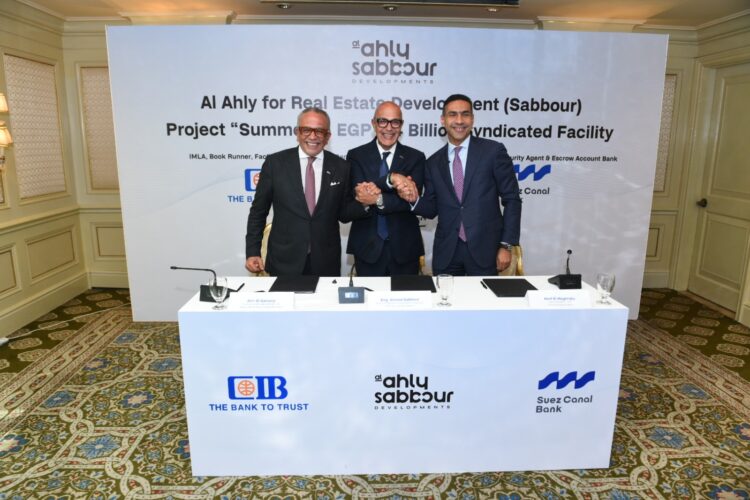
Commercial International Bank Egypt and Suez Canal Bank have arranged a long-term syndicated facility worth EGP 4.4bn for Al Ahly Sabbour Developments to finance construction of the Summer project on Egypt’s North Coast. The development is located in East Sidi Heneish near Ras El Hekma and, according to the developer, extends across about 434 feddans at kilometre 246 of the Alexandria–Marsa Matrouh road.
The reported tenor is approximately six years. CIB is acting as first initial mandated lead arranger, facility arranger, facility agent and account bank. Suez Canal Bank is also a first initial mandated lead arranger and facility arranger, and is serving as security agent and escrow account bank. Sarie Eldin & Partners is legal adviser to the lenders. Those roles indicate a structured transaction with several layers of monitoring, security and cash management.
Why the financing matters
Large coastal projects require substantial early spending on infrastructure, earthworks, utilities, landscaping and community facilities before many phases generate cash. A committed bank facility can reduce reliance on new customer instalments as the only construction funding source. It can also introduce reporting obligations, controlled accounts and drawdown conditions that connect access to funds with agreed project milestones. The detailed loan covenants, pricing and disbursement schedule were not disclosed in the reports.
For buyers, the presence of two regulated banks is a positive diligence signal, but it is not a delivery guarantee. Lenders protect their own credit position, and their security package may differ from protections available to unit purchasers. Customers should still examine the sale contract, delivery date, grace period, refund and penalty clauses, project licences, construction progress and the destination of instalment payments. A bank facility strengthens the funding picture without removing construction, market or execution risk.
For the developer, the facility can support faster procurement and reduce timing mismatches between construction expenditure and customer collections. It also creates obligations to comply with lender reporting, security and account-control requirements. Meeting those conditions consistently can improve access to future institutional funding. Failure to meet construction or sales assumptions, however, can increase financing pressure because debt service continues even when market absorption slows.
A test for North Coast year-round economics
Al Ahly Sabbour describes Summer as an integrated coastal destination with residential neighbourhoods and services intended to support year-round use. That ambition is important because the North Coast market has traditionally been highly seasonal. Financing can build physical assets, but year-round performance also depends on transport, employment, retail, healthcare, education, operations and sustained visitor demand beyond the summer season.
The transaction also illustrates deeper cooperation between Egyptian banks and large real-estate developers. Structured finance can impose greater discipline than funding based mainly on off-plan sales, but concentration risks remain. Banks and developers must assess construction costs, currency-sensitive inputs, demand elasticity and the pace of collections. Transparent progress reporting would help customers and the wider market evaluate whether financing is translating into completed infrastructure and delivered homes.
The EGP 4.4bn amount, bank roles, six-year tenor and project location were reported by Invest-Gate and independently repeated by Cairo24 in Arabic. Both reports rely substantially on statements from the transaction parties. Neither published the full facility agreement, interest margin, repayment profile or conditions precedent. Those undisclosed terms are material when assessing the facility’s total cost and the degree of protection provided to each stakeholder.
Completion data and lender-confirmed drawdowns will therefore be the most useful follow-up evidence.
Sources and verification
• Invest-Gate transaction report, 21 July 2026 (https://invest-gate.me/news/cib-egypt-and-suez-canal-bank-arrange-egp-4-4-billion-syndicated-loan-for-al-ahly-sabbour-to-develop-summer-project-on-the-north-coast/)
• Cairo24 Arabic corroboration, 21 July 2026 (https://www.cairo24.com/2462649)
• Al Ahly Sabbour corporate site for project and company information (https://www.alahlysabbour.com/)
Caveat: the facility terms have not been published in full, and the financing should not be interpreted as a bank guarantee to individual unit buyers.
Read Next Article
Calls for an Independent Property Regulator Put Buyer Protection at the Centre of Egypt’s Market Debate
A parliamentary proposal for an independent real-estate regulator has reopened the question of whether a developers’ federation alone can supervise buyers, brokers and public-sector developers.
Read Next +