
Egypt’s 39-New-City Expansion Moves into an Investment and Operations Test
egypt-39-new-cities-investment-operations-test-2026
Egypt says it has developed 39 new cities over the past decade. The next test is whether infrastructure, services, jobs and private investment can turn that physical expansion into durable urban demand.
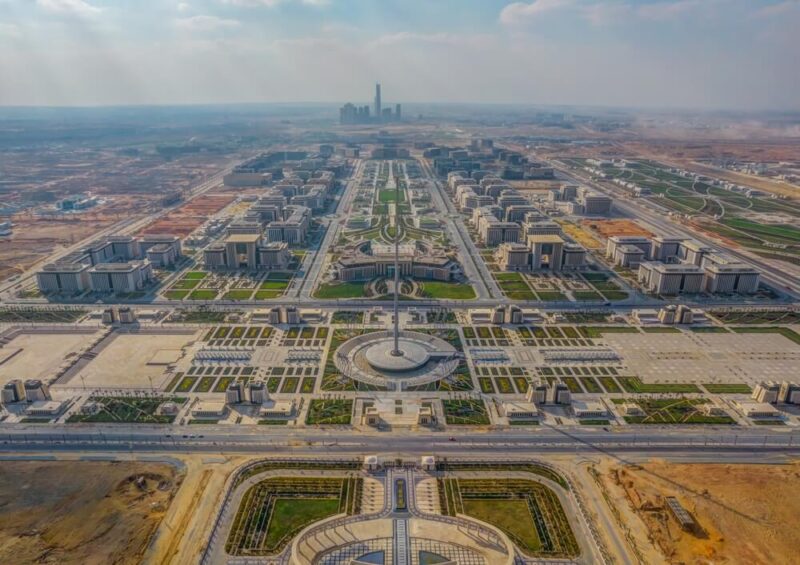
Egypt has developed 39 new cities over the past decade, Deputy Minister of Housing for New Urban Communities Walid Abbas said at Capital Forum 2026. The statement frames the country’s urban expansion as more than a housing programme: it links new-city construction with digital infrastructure, road connectivity, job creation and the attraction of domestic and foreign investment. The New Administrative Capital was presented as the flagship example of that strategy and as a model intended to compete for business activity, not only residents.
The figure is significant because it shows the scale at which the state has tried to redirect growth away from older, crowded urban centres. New communities can add serviced land, improve regional connectivity and create locations for homes, offices, logistics, education and healthcare. Yet the number of cities by itself does not measure success. The more useful questions are how many districts are occupied, whether utilities and public services operate reliably, how quickly employment follows housing, and whether households can afford the completed supply.
What the announcement means for the property market
For developers, a broad pipeline of new cities increases the range of land and partnership opportunities. It also raises the importance of selecting locations carefully. Projects that are connected to transport, schools, hospitals and established employment centres are more likely to build repeat demand than projects relying mainly on future promises. In a market with many competing destinations, execution quality, phased delivery and realistic pricing become more important than the size of a land bank.
For buyers, the announcement should be read as evidence of long-term public commitment to urban expansion, not as a guarantee that every district or project will appreciate at the same pace. A buyer still needs to check the developer’s title and licences, the project’s construction status, utility connections, maintenance arrangements, delivery history and the contractual treatment of delays. The practical value of a unit depends heavily on the surrounding city becoming usable, connected and economically active.
The forum also highlighted the role of public-private cooperation. That matters because a new city normally requires many layers of investment: trunk infrastructure and roads, plot development, buildings, retail, community services and long-term operations. Private capital can accelerate those layers, while the public sector sets planning rules and provides core infrastructure. The quality of coordination between the two sides will influence how quickly vacant land becomes a functioning market.
Investment opportunity, with measurable conditions
Investors may see opportunities in commercial, administrative, logistics and hospitality assets as government offices, universities and companies move into new locations. However, rental demand should be tested against actual occupancy and business activity rather than launch-stage marketing. Useful evidence includes opened roads, operating schools and hospitals, registered tenants, footfall, utility capacity and comparable rents. Those indicators are more informative than headline sales values alone.
The 39-city figure was reported from remarks at Capital Forum 2026 and was corroborated by Al-Ahram’s Arabic coverage of the same event. The reports describe a programme supported by smart infrastructure and a national road network, but they do not provide a city-by-city table of completion, occupancy or investment performance. Readers should therefore treat the number as a national programme indicator, not as an audited performance score for every location.
For the next stage, the market will watch whether urban development policy gives equal attention to operation after construction. Reliable transport, public spaces, maintenance, security, digital services and transparent property registration are essential to turn physical supply into places where households and businesses remain. If those elements mature alongside construction, the new-city programme can broaden Egypt’s investable property map. If they lag, some locations may face slower absorption and higher carrying costs.
Sources and verification
• Daily News Egypt report, 21 July 2026 (https://www.dailynewsegypt.com/2026/07/21/egypt-develops-39-new-cities-over-past-decade-under-urban-expansion-strategy-deputy-housing-minister/)
• Al-Ahram Gate coverage of Walid Abbas’s forum remarks, 21 July 2026 (https://gate.ahram.org.eg/News/5814668.aspx)
Caveat: the cited reports confirm the statement and its policy context, but do not publish independent occupancy, delivery or financial data for all 39 cities.
Read Next Article
Empire State targets EGP5.6bn Upmount sales in New Capital
Empire State Developments targets about EGP5.5–5.6bn in Upmount sales while prioritising construction progress and cash-flow discipline.
Read Next +