Egypt and U.S. Explore New-City Investment and Desalination Cooperation
egypt-us-new-city-investment-desalination-cooperation
Egypt’s housing ministry and the U.S. mission discussed investment in new cities, advanced desalination technology and future private-sector cooperation, without announcing a signed project.
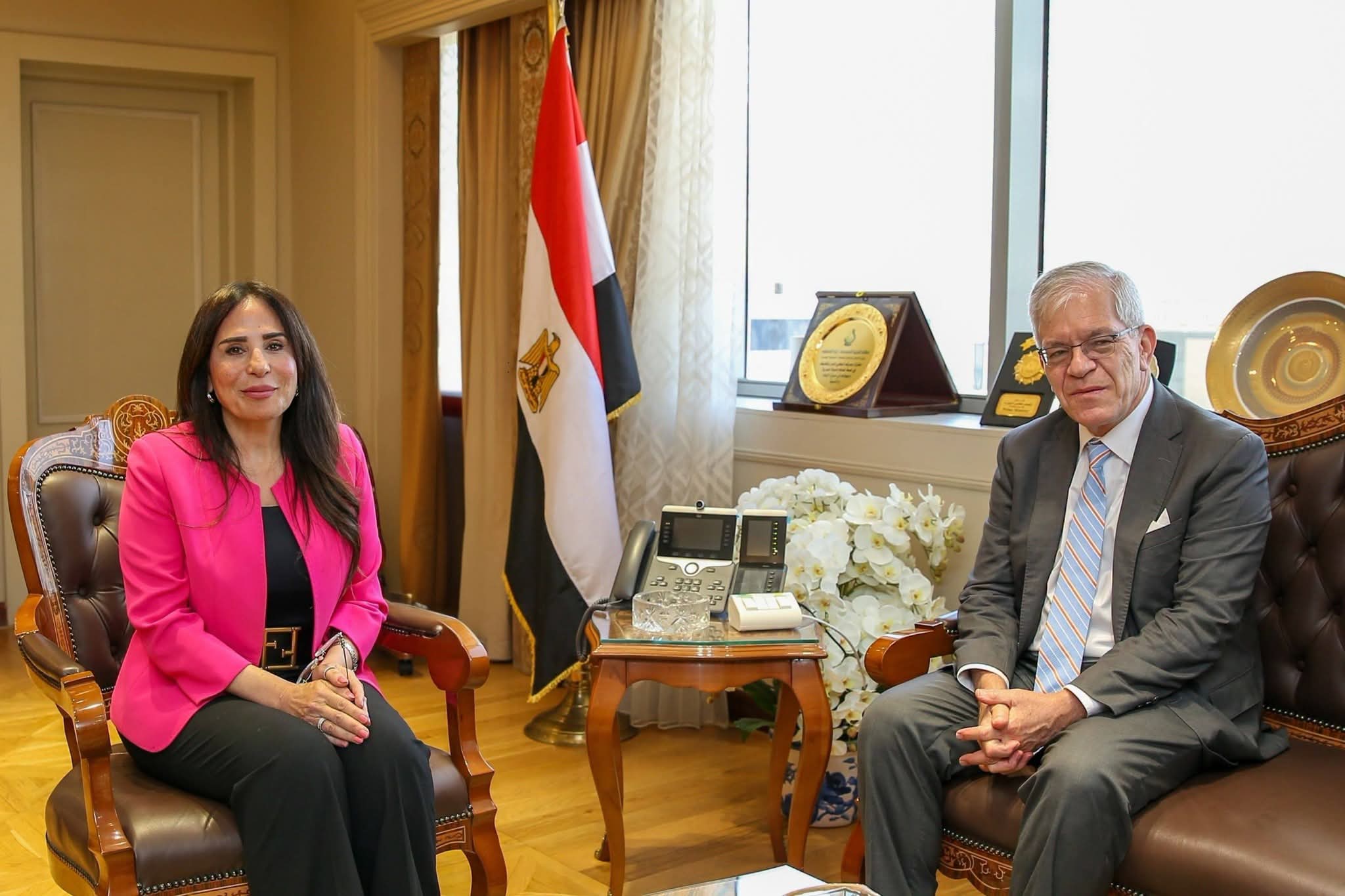
Egypt’s Ministry of Housing, Utilities and Urban Communities has opened a new discussion with the United States over investment in new cities, infrastructure technology and seawater desalination. Housing Minister Randa El-Menshawy received Robert Silverman, chargé d’affaires at the U.S. Embassy in Cairo, at the ministry’s headquarters in the New Administrative Capital on 10 August. The meeting was reported from a ministry announcement by Invest-Gate and focused on areas where American companies and institutions could participate in Egypt’s urban-development programme.
The most important point is what the meeting did and did not produce. Both sides discussed prospective investment opportunities in new cities and possible cooperation on desalination using advanced technology and international expertise. They also agreed to maintain coordination. No specific city, plant capacity, investment value, tender, contractor or signing timetable was announced. Buyers and developers should therefore treat the meeting as an early policy and business-development signal, not as evidence that a new project has already been awarded or financed.
The ministry said Egypt’s recent new-city programme and large national projects create room for private-sector and international participation. In practical terms, that can include capital, engineering services, specialist equipment, operating expertise and technology transfer. Desalination is especially relevant to coastal urban growth because water availability is a binding condition for year-round communities, tourism destinations and industrial activity. However, the commercial impact will depend on later decisions about procurement, tariffs, energy use, environmental approvals and the allocation of construction and operating risk.
For property buyers, the discussion reinforces the importance of checking infrastructure rather than relying only on a project’s marketing plan. A coastal or new-city unit can be physically complete while utility capacity, treatment systems or operating arrangements remain under development. Buyers should ask for evidence of permanent water supply, electricity, roads and facility-management responsibilities, and should distinguish between planned infrastructure and infrastructure that is commissioned and operating. The meeting itself does not change any delivery date or contractual obligation for a private development.
For developers and contractors, the talks point toward potential openings for U.S. technology providers and Egyptian partners in desalination, water reuse, smart-network monitoring and efficient urban infrastructure. Yet an opportunity becomes bankable only after a defined project, procurement route, funding structure and risk allocation are published. Companies considering participation should monitor Ministry of Housing and New Urban Communities Authority notices, while preparing local-partner, lifecycle-cost and operations proposals rather than assuming a conventional construction-only contract.
There is also a broader investment implication. International cooperation can improve technical standards and widen the supplier base, but foreign technology does not remove the need for local capacity, spare parts, trained operators and affordable long-term maintenance. Desalination is energy intensive, so future proposals will need credible assumptions for power supply and operating costs. The strongest projects are likely to connect water planning with land use, population forecasts and phased real-estate delivery instead of treating the utility as a standalone asset.
The official discussion is relevant because it links urban investment with infrastructure performance, but its immediate market effect is limited. Until the ministry identifies named projects or issues tenders, the correct conclusion is that Egypt and the United States are exploring cooperation. That is a positive channel for future investment and knowledge exchange, not a guarantee of contracts, finance or delivery.
Sources: Invest-Gate report, 10 August 2026: https://invest-gate.me/news/housing-minister-meets-u-s-charge-daffaires-to-boost-cooperation/
Official Ministry of Housing channel: https://www.facebook.com/EgyptianMinistyOfHousing/
U.S. Embassy in Egypt: https://eg.usembassy.gov/
A further test will be whether cooperation produces transparent, comparable project data. Investors need published information on demand, water offtake, capital expenditure, operating expenditure and performance standards. Residents need clarity about service reliability and cost. Public disclosure of these elements would make it easier to compare proposals and would reduce the risk that ambitious technology claims outrun a city’s actual ability to operate and maintain the system over decades.
Read Next Article
Wadi Degla Takes ClubTown to New Minya with EGP 15bn Plan
ClubTown Minya marks Wadi Degla’s Upper Egypt entry, with execution, local affordability and infrastructure now the key tests.
Read Next +