
Housing Ministry reviews finishing work at New Capital business district
new-capital-business-district-inspection-september-2026
A September 24 inspection covered office, residential and hospitality components. The visit is a progress review, not a district-wide opening or buyer handover announcement.
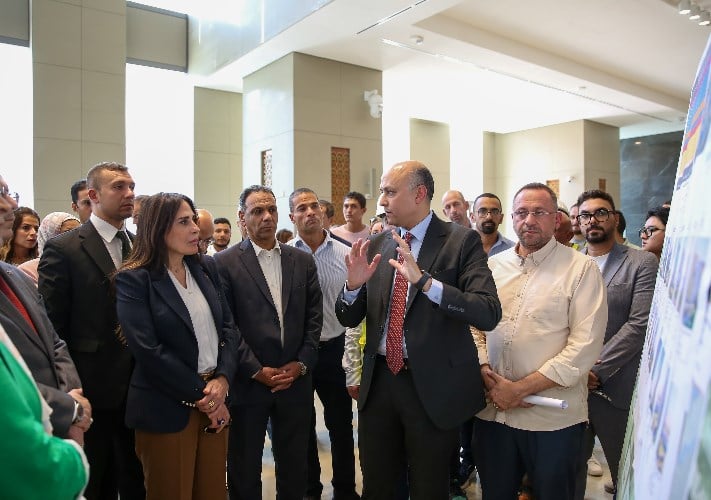
Egypt’s Housing Ministry has reviewed construction progress and finishing work across several components of the Central Business District in the New Capital. Reports published on 24 September 2026 describe an inspection led by Housing Minister Randa El-Menshawy, accompanied by Walid Abbas and project representatives. The development is relevant to office users, prospective residents and hospitality operators, but the announcement should not be read as confirmation that the entire district has opened.
Al Mal and Youm7 carried accounts of the ministry’s visit on the same day. Both describe a review of office, residential and hotel-related components. The factual core of this article is drawn from that reported ministry statement and cross-checked between the two publications. The practical implications below are editorial analysis; they do not replace official building approvals, operating announcements or the terms of an individual property contract.
What the inspection covered
The published itinerary included the C11 office tower, the Iconic Tower, the D03 residential tower and the C10 crescent and hotel component. The accounts describe checks on execution and finishing, including visits to sample residential and hotel spaces. The ministry presented the tour as part of continuing oversight aimed at bringing the district’s components into efficient operation. A visit to a sample space does not establish that every unit in its building is ready.
The reports contain detailed building specifications, but the essential new development is the inspection itself. We have not converted those specifications into a claim about newly released supply, completed sales or current occupancy. Nor do the linked announcements provide a universal move-in date for all residential units or a single confirmed opening date for every commercial and hospitality component. Those distinctions matter when interpreting a high-profile project update.
What prospective occupiers should ask
For an office tenant, a tour of finished areas can be a useful sign of progress, but planning a relocation requires more specific information. Questions should concern the actual premises being offered, fit-out access, utility arrangements, building management and the date on which the contracted space can be used. A district-level announcement cannot answer those questions for each building, floor or tenancy, and should not be presented as doing so.
Residential purchasers face a similar distinction between a sample apartment and their own unit. A sensible review would compare the contracted specification with the unit presented for inspection and document any outstanding items through the applicable handover process. Buyers should seek written clarification from the responsible party where dates or specifications are unclear. This is general due-diligence commentary, not an assertion that defects or delays have been identified in this project.
Operational readiness is broader than appearance
Our assessment is that the transition from construction to occupation should be understood as a sequence of building-specific steps. Attractive finishes are only one aspect of a usable property. Access, maintenance responsibilities, service arrangements and the coordination of different uses also influence everyday experience. The inspection announcement does not certify those matters for every component, and this article does not claim to have independently tested their performance.
The mixture of offices, homes and hospitality also makes precise communication important. A hotel sample room, a residential viewing and an office inspection concern different products and operating arrangements. Readers should avoid transferring the readiness of one component to another. Likewise, the appearance of a hospitality brand in a project description is not, by itself, evidence that reservations are open or that guests are currently being received.
Implications for developers and the wider market
For developers and commercial intermediaries, the immediate lesson is to explain progress at the appropriate level of detail. Marketing materials can accurately reference the ministerial inspection while distinguishing the inspected areas from the full project. Clear documentation of what has been completed, what remains underway and which dates are formally confirmed is more useful to customers than a broad suggestion that an entire district is finished.
The inspection offers a current update on a major business district, not a basis for forecasting guaranteed rents or capital gains. Its eventual commercial significance will depend on verifiable operating milestones and actual use. Until those are announced, buyers, tenants and developers should rely on project-specific written information and keep the difference between construction progress, contractual handover and operational opening explicit.
Sources: Al Mal, ministry inspection account, 24 September; Youm7, corroborating ministry account, 24 September. Cover: the inspection photograph published by Al Mal, uploaded to Impact Group rather than hotlinked.
Read Next Article
Egyptian developers debate classification and buyer safeguards at industry roundtable
September roundtable discussions examine developer classification, project finance and market data. The proposed professional body is not an enacted new regulatory regime.
Read Next +